
Are your premium bandage dress stocks losing their charm too soon?
Faded colors or stretched fabrics can frustrate customers.
This hurts your returns and reputation.
Let’s fix that with proven care tips.
To maximize investment in bandage dresses, proper care is crucial.
Consistent, gentle handling and appropriate storage prevent common issues like stretching or fading.
This approach extends the garments’ lifespan, maintaining their original appeal and reducing the need for costly replacements.
Optimal care ensures lasting quality and customer satisfaction.

Curious about extending the value of your inventory?
Keep reading to explore practical insights on the bandage dress market.
These tips can help your business reduce returns and build trust.
Why Is Proper Bandage Dress Care a B2B Imperative?
Ever wonder why some retailers struggle with returns?
Poor care of bandage dresses can devalue your stock fast.
It’s not just fabric; it’s your bottom line at stake.
Protect your investment with smart practices.
Caring for bandage dresses is critical for B2B success.
When inventory from a top-tier bandage dress manufacturer stays in prime condition, you minimize losses.
Returns drop, and profits rise. Simple care steps ensure your stock remains desirable for buyers.
This directly impacts your business growth and reputation.

These insights can transform how you manage stock.
Let’s dive deeper into safeguarding your bandage dress inventory and keeping customers coming back.
Safeguarding Your Retail Inventory Value
Protecting inventory is a priority for any retailer.
A single damaged batch from a stylish bandage dress wholesaler can cost thousands.
Proper care prevents this loss and maintains resale value.
- Check Labels First: Always review care instructions on arrival.
Different fabrics from a bandage dress factory may need specific handling.
This small step avoids costly mistakes during storage or cleaning. - Avoid Bulk Damage: Store bandage dresses away from harsh conditions like humidity.
Excess moisture can fade colors or warp shapes.
Ensure your warehouse setup prioritizes fabric safety for long-term value. - Track Wear Signs: Regularly inspect stock for early damage signals.
Catching small issues prevents larger losses.
This practice keeps your inventory market-ready.
Let’s shift focus now.
Beyond protecting stock, proper care builds stronger customer bonds.
Keep exploring to see how.
Enhancing Customer Satisfaction & Loyalty
Happy customers mean repeat business.
When bandage clothing stays flawless, buyers notice the quality.
This trust turns one-time clients into loyal partners for your retail brand.
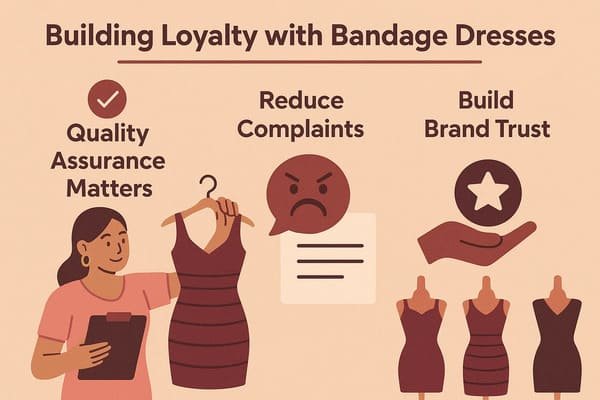
- Quality Assurance Matters: Deliver bandage dresses that look fresh and fit perfectly.
End buyers appreciate their durability.
This shows you value their experience beyond the sale. - Reduce Complaints: Well-maintained bandage dress stock cuts down on negative feedback.
Ensure each piece reflects high standards.
Satisfied clients often spread positive word-of-mouth. - Build Brand Trust: Consistency in product condition sets you apart.
Customers rely on bandage dress retailers who prioritize care.
This trust encourages larger orders and long-term partnerships with your business.
These points redefine how buyers see your inventory.
Let’s move to initial handling tips for keeping bandage dresses in top shape.
How Should Retailers Handle Bandage Dresses Initially?
First impressions count, even with stock.
Handling new shipments of stylish bandage dresses properly from the start is crucial.
Let’s focus on those early steps to ensure lasting quality and customer satisfaction.
To effectively manage bandage dress inventory, retailers must meticulously inspect new arrivals for defects.
Proper storage, either flat or hung, prevents damage and maintains shape.
Training staff on delicate handling is crucial.
These steps safeguard quality and optimize stock for sale.
These basics set a solid foundation.
Stick around to uncover specific handling tricks for bandage dress stock in retail settings.
Receiving & Inspecting New Shipments
First impressions count even with inventory.
A thorough check upon arrival from a sophisticated bandage dress factory catches issues early.
Don’t let small flaws turn into big problems.
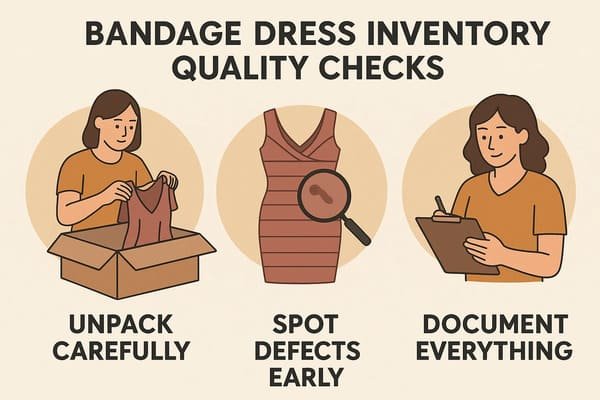
- Unpack Carefully: Open boxes with care to avoid accidental tears.
Rushing can damage delicate bandage clothing.
Take time to ensure each piece remains intact during unpacking. - Spot Defects Early: Look for loose threads or fabric pulls right away.
Early detection saves time and money.
Report issues to your supplier for quick resolutions or replacements. - Document Everything: Keep records of shipment conditions and defects.
Photos help when discussing concerns with a bandage dress manufacturer.
This practice streamlines communication and accountability.
Now that arrivals are covered, let’s talk storage.
Proper setups keep your inventory pristine for sales.
Optimal Inventory Storage Solutions
Storage isn’t just about space; it’s about preservation.
Poor setups can stretch or fade bandage dresses.
Smart solutions maintain the quality of these garments effectively.
- Use Padded Hangers: Hang bandage dresses with straps on padded hangers to avoid stretching. Wire hangers can ruin shapes over time.
This keeps your stock looking fresh for buyers. - Lay Flat When Possible: For sleeveless styles, store flat in drawers.
Overhanging risks of fabric distortion.
Ensure ample space to prevent creases in bandage clothing inventory. - Control Environment: Keep storage areas cool and dry.
Humidity or heat damages fabric over time.
A stable setup protects stock from a custom bandage dress supplier.
Storage is just one piece of the puzzle. Let’s explore how staff training ties into early care success.
Educating Staff on Bandage Dress Basics
Your team is your frontline defense. Without proper knowledge, mishandling bandage dresses becomes common.
Equip them with essentials for better inventory management.
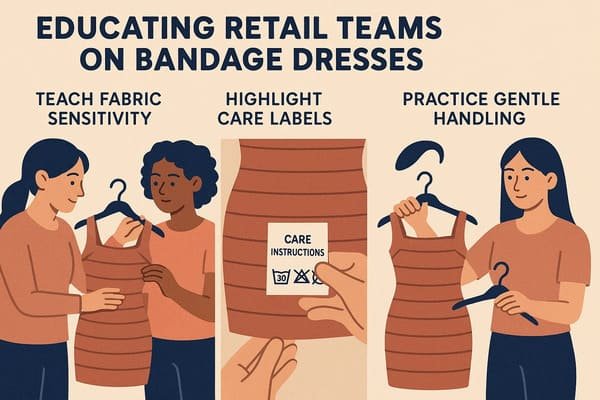
- Teach Fabric Sensitivity: Show staff how bandage clothing reacts to rough handling.
Stretching or folding incorrectly harms the quality.
Brief training avoids costly errors during daily tasks. - Highlight Care Labels: Ensure everyone checks tags before any action.
Different batches from a chic bandage dress supplier may vary.
This prevents accidental damage during processing. - Practice Gentle Handling: Encourage soft touches when moving stock.
Rough actions can snag delicate materials.
A careful approach preserves appeal for end buyers consistently.
These efforts lay the groundwork.
Let’s pivot to cleaning methods to keep bandage dresses looking brand new.
What Are the Best Cleaning Protocols for Bandage Dresses?
Cleaning can make or break your inventory’s lifespan.
Harsh methods ruin even the finest bandage dresses.
Get it right to maintain allure and protect your stock.
Bandage dresses require gentle cleaning to preserve their unique texture and fit.
Hand washing or delicate machine cycles are recommended.
These methods prevent damage, maintaining the garments’ elasticity and color.
Proper cleaning ensures the longevity and quality of these specific apparel items.
These tips are game-changers for inventory care.
Keep reading to master specific cleaning techniques for bandage dress stock.
Best Practices for Hand Washing
Hand washing is the safest bet for delicate fabrics.
It protects bandage dresses from unnecessary strain.
Follow proven steps to keep your inventory flawless.
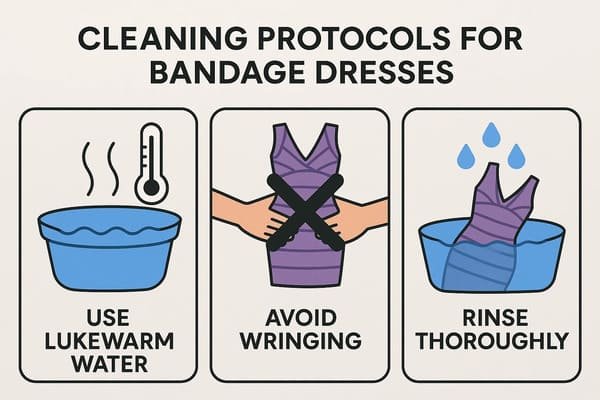
- Use Lukewarm Water: Fill a basin with lukewarm water and mild soap.
Hot water can shrink or fade bandage clothing.
This keeps colors vibrant and fabric safe during cleaning. - Avoid Wringing: Never twist or squeeze the dress after washing.
Lay it flat and press water out gently.
This prevents stretching and maintains shape for retail display. - Rinse Thoroughly: Ensure no soap residue remains on the fabric.
Leftover detergent can dull colors over time.
A clean rinse preserves the appeal of a sleek bandage dress wholesaler.
Let’s shift gears now.
Machine washing can work in some cases if done with caution.
Machine Washing: When and How
Sometimes, hand washing isn’t practical for bulk inventory.
Machine washing bandage dresses can work with care.
Know the right settings to avoid damage.
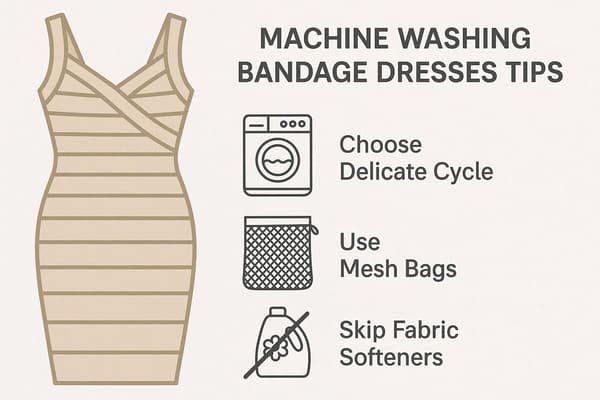
- Choose Delicate Cycle: Always select the gentlest, coolest cycle available.
Harsh settings can warp bandage clothes.
This minimizes risk while cleaning larger batches efficiently. - Use Mesh Bags: Protect dresses in mesh laundry bags during washes.
This prevents snags or stretching in machines.
It’s a simple trick to safeguard stock from a trendy bandage dress supplier. - Skip Fabric Softeners: Avoid softeners or bleach in washes.
These chemicals can break down stretch fibers.
Stick to mild detergents for safe, effective cleaning results.
Now that washing is covered, drying is the next critical step.
Let’s explore how to do it right.
Drying Techniques to Preserve Shape
Drying sounds simple, but mistakes stretch fabrics.
Poor methods ruin bandage dresses fast.
Use careful techniques to maintain their iconic fit.
- Lay Flat Always: Place bandage dresses flat on a rack or towel to dry.
Hanging wet fabric distorts shapes badly.
This keeps elasticity intact for perfect customer fits. - Turn Occasionally: Flip the bandage dress during drying to ensure even results.
Uneven drying can cause weird creases.
Regular turns help maintain a polished look for sales. - Avoid Direct Heat: Keep drying areas away from sunlight or heaters.
Heat fades colors and weakens fibers.
A cool, shaded spot works best for bandage clothing care.
Next up, handling stains.
Quick action can save a dress from permanent damage.
Addressing Stains and Spills Effectively
Spills happen, even in storage or display.
Ignoring stains on bandage dresses risks unsellable stock.
Act fast with gentle methods to save inventory.
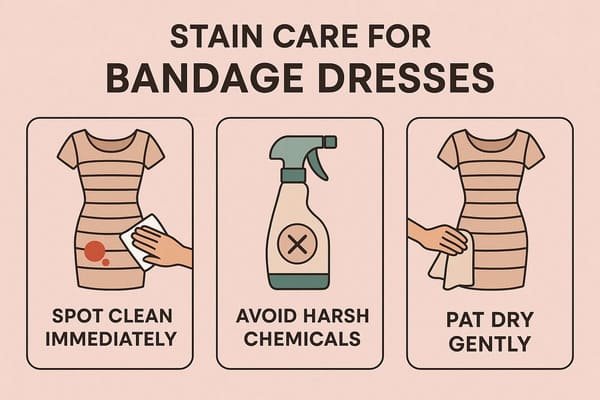
- Spot Clean Immediately: Dampen stained areas with cold water right away.
Rub in mild soap softly.
Quick rinses prevent lasting marks on delicate bandage clothes. - Avoid Harsh Chemicals: Skip bleach or strong cleaners on stains.
These can discolor or weaken fabrics.
Stick to simple solutions for safe results every time. - Pat Dry Gently: After cleaning, pat the area dry with a towel.
Rubbing can damage stretch fibers.
This preserves quality from a premier bandage dress manufacturer.
These cleaning steps ensure lasting quality.
Let’s move to long-term maintenance for continued success.
How to Maintain Bandage Dresses for Long-Term Value?
Beyond cleaning, ongoing care secures your investment.
Neglecting maintenance fades bandage dresses over time.
Adopt smart habits for lasting inventory appeal.
To maintain bandage dresses for long-term value, iron them gently on low heat to prevent fabric damage.
Promptly repair any snags or loose threads to avoid further deterioration.
Guiding customers on proper basic care practices can also significantly reduce returns and extend garment life.
These strategies boost inventory life.
Stay with me to learn detailed post-care tricks for bandage dress stock.
Ironing and Steaming for a Flawless Finish
Creases can make even premium bandage dresses look cheap.
Ironing or steaming revives their polish.
Do it right to impress buyers every time.
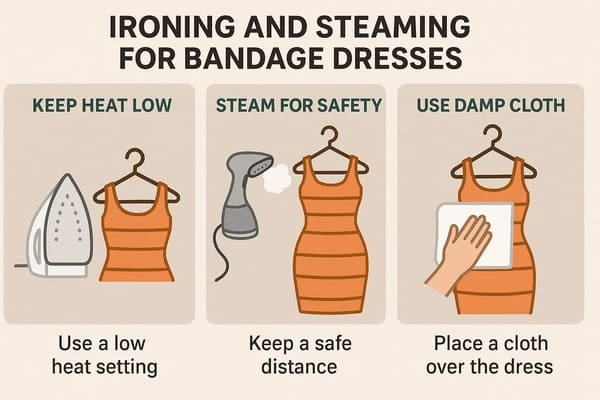
- Keep Heat Low: Use low settings when ironing bandage clothes.
High heat risks shiny marks or burns.
Iron inside out to protect the outer fabric finish. - Steam for Safety: If unsure, steam instead of ironing directly.
Steamers remove wrinkles without contact risks.
This works well for delicate stock from a sophisticated bandage dress factory. - Use Damp Cloth: For dry dresses, place a damp cloth between the iron and the fabric.
This prevents direct heat damage.
It ensures a smooth look for retail displays.
Now let’s tackle repairs. Small fixes can save a dress from becoming unsellable.
Repairing Minor Damages & Snags
Snags or loose threads happen in storage or display.
Ignoring them risks bigger tears in bandage dresses.
Fix issues early to save stock.
- Trim Loose Threads: Carefully cut stray threads with small scissors.
Don’t pull, as this worsens damage.
Clean cuts keep dresses from a stylish bandage dress wholesaler looking neat. - Stitch Small Tears: For tiny rips, use a needle and matching thread. Small, tight stitches blend seamlessly.
This quick fix extends inventory life for customer sales. - Patch If Needed: For larger issues, consider discreet fabric patches.
Match colors closely for minimal visibility.
This preserves appeal without discarding valuable bandage clothing stock.
Repairs keep stock sellable.
Next, let’s cover advising customers on care for fewer returns.
Advising Customers on Personal Care
Your buyers’ handling affects returns.
Guiding them on bandage dress care cuts complaints.
Share simple tips for better end-user satisfaction.
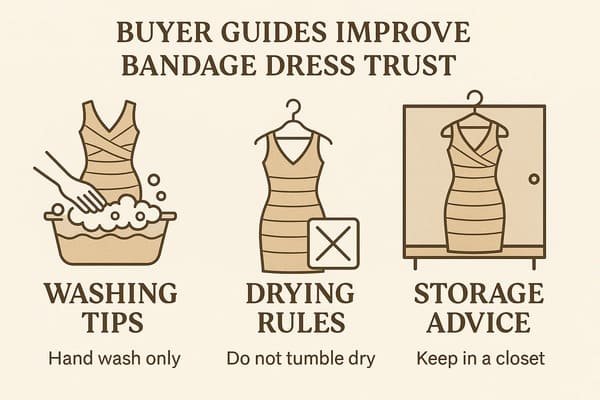
- Share Washing Tips: Suggest hand washing with mild detergent to clients.
Explain why wringing is harmful.
This helps end users maintain shape and avoid early wear. - Explain Drying Rules: Advise laying dresses flat to dry, not hanging.
This prevents stretching over time.
Clear guidance ensures the longevity of bandage clothes post-purchase. - Offer Storage Advice: Recommend padded hangers or flat storage to buyers.
Proper setups avoid creases.
These tips reflect expertise from a reliable bandage dress supplier.
These care practices pay off.
Let’s wrap up with final thoughts on maximizing investment returns.
How Can You Maximize Bandage Dress Investment Returns?
Think about the big picture for your inventory.
Diligent care of bandage dresses boosts ROI.
Let’s tie it all together for lasting business impact.
To maximize bandage dress investment returns, focus on consistent care, including proper washing and drying, using appropriate hangers for storage, and ironing gently or steaming.
Addressing minor repairs promptly also extends garment lifespan.
Educating buyers on these care practices can further reduce returns, ensuring profitability and building buyer confidence.
These final insights seal the deal.
Let’s explore how care translates to measurable business gains.
The ROI of Diligent Care Practices
Every care step adds value to your stock.
Bandage dress maintenance isn’t just effort; it’s profit.
Smart practices yield measurable financial gains.
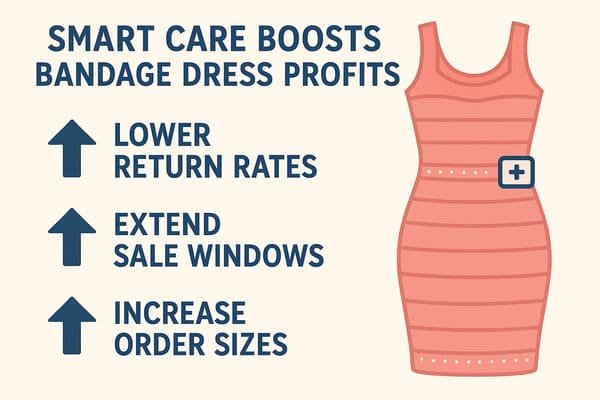
- Lower Return Rates: Well-kept bandage clothes face fewer complaints or returns.
Customers value pristine condition.
This saves replacement costs and boosts your bottom line directly. - Extend Sale Windows: Longer-lasting inventory means more selling opportunities.
Dresses stay market-ready over time.
This maximizes earnings from each batch sourced from a custom bandage dress supplier. - Increase Order Sizes: Satisfied buyers often reorder in bulk.
Quality care builds this trust.
It turns one-time sales into recurring revenue for your retail business.
Care doesn’t just save money; it builds reputation.
Let’s see how longevity wins customer trust.
Building Trust Through Product Longevity
Durability sells in B2B markets.
When bandage dresses last, buyers trust your stock.
This reputation drives loyalty and larger deals.
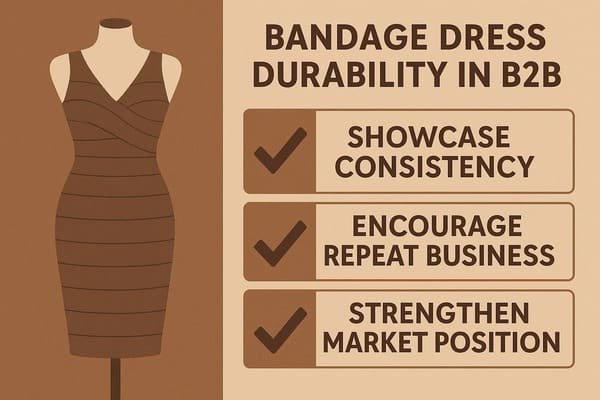
- Showcase Consistency: Deliver bandage clothing that withstands wear with care.
Buyers notice reliable quality.
This sets you apart as a dependable retailer in competitive markets. - Encourage Repeat Business: Long-lasting products from a versatile bandage dress wholesaler keep clients returning.
Durability equals dependability.
It’s a silent pitch for ongoing partnerships with buyers. - Strengthen Market Position: Trust in product life enhances your brand image.
Customers prefer retailers with lasting inventory.
This edge helps secure bigger contracts over competitors.
These points highlight care’s true impact.
Let’s conclude with actionable takeaways for your business.
Conclusion
Caring for bandage dresses ensures lasting value for your B2B inventory.
These strategies reduce returns, boost satisfaction, and maximize profits.
Ready to elevate your stock game?
Explore more at our homepage or reach out via our contact page.
Let’s build success together.