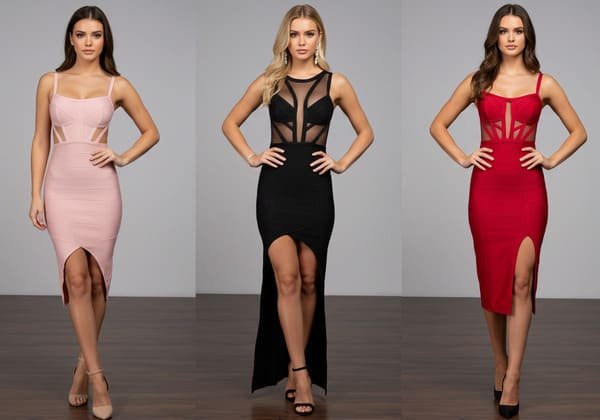
Fast-fashion brands observe giants like Fashion Nova dominating the bandage dress market, but often struggle to keep pace.
Their operations and supply chains cannot match the speed.
This guide reveals the core business strategies behind this success, offering a blueprint for B2B buyers.
B2B suppliers can learn from the rapid integration of trend analysis and agile manufacturing.
This approach, exemplified by popular brands, enables the quick adaptation of designs, such as a bandage dress, to market demands.
Efficient supply chain management is crucial for minimizing inventory risks and optimizing production speed, thereby making trendy items both accessible and cost-effective.
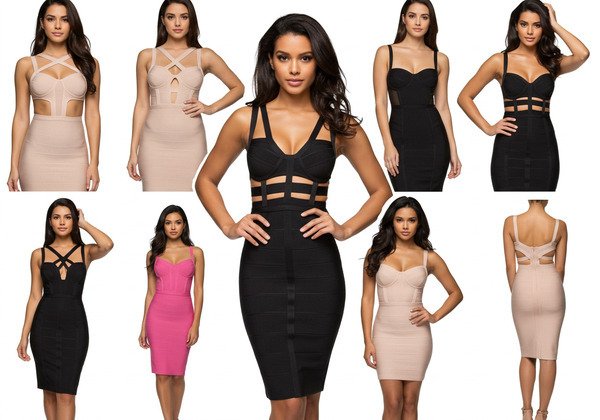
This is more than just marketing.
It’s a fundamental business approach.
I will share more practical tips to help you gain a competitive edge in your bandage dress sourcing.
Continue reading for a deep dive.
How Can a Fast-Fashion Supply Chain Masterclass Elevate Your Bandage Dress Business?
Struggling with slow production and high inventory costs for your bandage dress line?
Many businesses face delays that prevent them from capitalizing on fast-moving trends.
This lag can result in missed opportunities and lost revenue in the competitive fashion market.
A fast-fashion supply chain elevates a bandage dress business by integrating rapid production cycles and lean inventory practices.
Leveraging data analytics for trend prediction and fostering flexible factory partnerships allows for quick turnarounds and responsive manufacturing.
This approach minimizes risk, maximizes market responsiveness, and ensures bandage clothing collections remain current and appealing.

These insights will fundamentally change how you view bandage dress procurement.
Why is this model so critical for modern fashion brands?
Let’s explore the key components that make it work so effectively.
Agile Production and Inventory Management for bandage clothing
To compete effectively, your operations must be lean and responsive.
It starts with adopting production methods that mirror the speed of changing trends.
This ensures your brand remains relevant and in-demand.
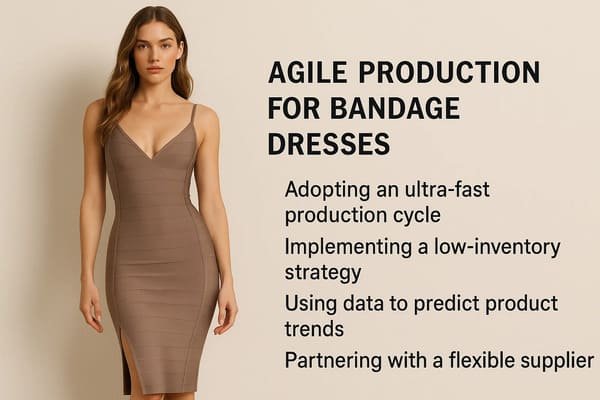
- Adopting an ultra-fast production cycle: This means turning designs into finished products in weeks, not months.
A responsive bandage clothing factory uses streamlined workflows to meet tight deadlines without sacrificing quality. - Implementing a low-inventory strategy: Holding minimal stock reduces financial risk and storage costs.
This approach allows brands to test new plus size bandage dress styles and restock only the proven bestsellers quickly. - Using data to predict product trends: monitor social media and sales data to forecast demand.
This allows a custom bandage dress supplier to anticipate what shoppers want next and prioritize production accordingly. - Partnering with a flexible supplier: Your production partner must be able to scale up or down quickly.
A flexible manufacturer accommodates small test batches and large bulk orders with equal efficiency.
Agility is not just about speed; it’s about smart, data-informed decisions.
This synergy between trend analysis and production capability creates a powerful advantage, keeping your inventory lean and desirable for your customers.
Supply Chain Synergy and Optimization in bandage clothes
A responsive supply chain requires for bandage dresses more than just speed.
True optimization emerges from deep collaboration and strategic alignment with your manufacturing partner.
This creates a seamless flow from production to delivery.
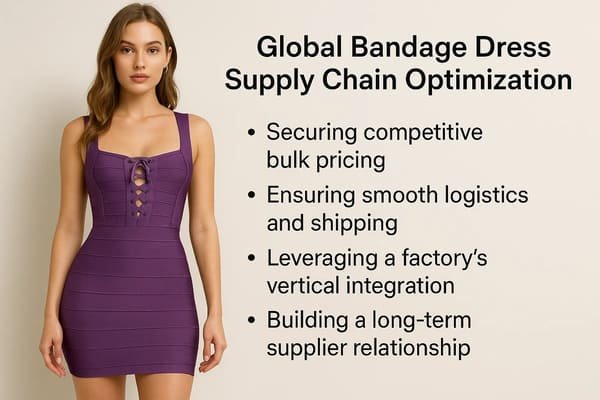
- Securing competitive bulk pricing: Strong relationships with a bandage clothing wholesaler often lead to better rates on larger orders.
This helps you manage margins while offering attractive prices to your customers. - Ensuring smooth logistics and shipping: An experienced supplier handles international shipping complexities effortlessly.
They ensure your bandage dress shipments clear customs and arrive on schedule, avoiding costly delays. - Leveraging a factory’s vertical integration: Working with a factory that controls the process from fabric sourcing to final stitching offers huge benefits.
It improves quality control and speeds up the entire production timeline.
Based on our experience, this is a game-changer. - Building a long-term supplier relationship: A trusted partnership is built on communication and mutual goals.
A reliable bandage clothes supplier acts as a strategic ally, invested in your growth and success.
A fully optimized supply chain is your biggest competitive asset.
It creates efficiencies that reduce costs, improve quality, and ensure you never miss a market opportunity for your brand’s growth.
How Does the ‘Luxury for Less’ Strategy Work for a bandage dress manufacturer?
Does offering high-end styles at budget-friendly prices seem impossible?
Many brands struggle to balance quality with affordability.
This challenge often leads to compromises that can hurt brand perception or profitability in the bandage clothing market.
The ‘luxury for less’ strategy for a bandage dress manufacturer focuses on delivering perceived value.
This involves offering fashionable bandage dress designs at competitive prices, achieved through optimized production costs without compromising garment quality.
This approach allows for providing premium-quality clothing without a high price tag, enhancing market appeal and customer satisfaction.
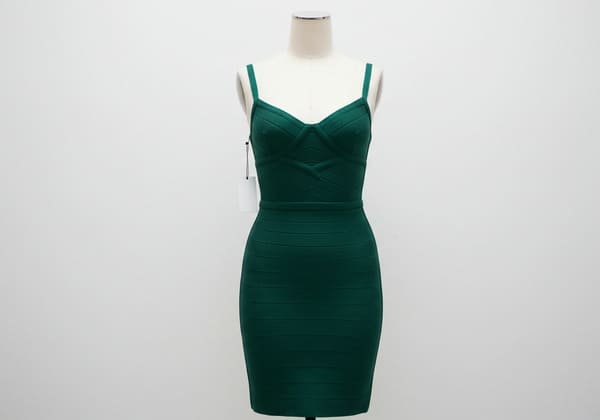
This strategy is about smart positioning in a very competitive market.
Why is this pricing model so effective?
Let’s break down how to master it for your private label bandage dress collections.
Mastering Pricing and Accessibility
Making fashion accessible is not just about lowering prices.
It requires a strategic approach that aligns product, cost, and consumer expectations.
This balance ensures profitability while building a loyal customer base.
- Setting strategic, consumer-friendly prices: Analyze the market to find a competitive yet profitable price point.
The goal is to make your bandage clothing an easy purchase decision for your target audience. - Introducing tiered product collections: Offer a range of bandage dress styles at different prices.
This could include a basic collection and a premium private label line with more intricate designs or fabrics. - Controlling costs with efficient manufacturing: Work with a bandage dress manufacturer who can optimize production.
Efficient processes and bulk material sourcing reduce costs, which you can pass on as savings. - Understanding target market spending habits: Know what your ideal customer is willing to spend on a bandage clothes.
This insight guides your pricing strategy and ensures your products are positioned correctly.
Mastering this balance transforms your brand from just another option into the go-to choice.
It builds a reputation for delivering exceptional style and value, which fosters long-term customer loyalty and trust.
How Can B2B Suppliers Adopt Influencer Marketing for Bandage Dress Success?
Many B2B suppliers feel disconnected from the massive sales driven by influencer marketing.
The key for B2B isn’t direct promotion, but creating pull-through demand by helping your clients sell more bandage dresses.
Influencer marketing for B2B bandage dress suppliers focuses on empowering clients.
By providing trend insights, quality samples, and content ideas, suppliers can support their clients’ marketing.
This collaborative approach generates pull-through demand for bandage dresses, ultimately boosting sales for all parties involved.

This indirect approach is powerfully effective for long-term growth.
Supporting your clients’ success directly fuels your own. Here’s why this collaborative marketing is a winning strategy for everyone involved.
Driving Demand Through Strategic Marketing
Influencer marketing bridges visibility and sales.
For a premier bandage dress factory, it’s a tool to boost B2B client demand.
Here’s how to execute it.
- Supplying samples for micro-influencer campaigns: Provide your clients with bandage dress samples for their influencer partnerships.
Micro-influencers often deliver higher engagement and feel more authentic to their followers, driving real interest. - Encouraging user-generated content (UGC): Advise clients to run contests or campaigns that motivate their customers to share photos.
Seeing real people wearing your plus size bandage dress designs is powerful social proof. - Leveraging scarcity with limited edition drops: Suggest offering exclusive, limited-run bandage clothing collections.
This creates urgency and hype, encouraging immediate purchases and boosting brand excitement.
This is a tactic we have seen work very well. - Advising clients on the latest social media trends: Share insights on what’s trending on platforms like TikTok and Instagram.
Helping your clients create relevant content ensures their bandage dresses get noticed.
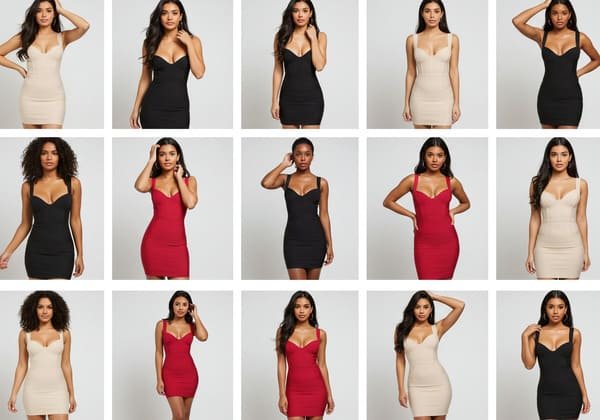
By actively helping your clients with marketing, you become an indispensable partner.
This collaborative effort ensures your custom bandage dress designs are not just manufactured but also successfully sold to end consumers.
Conclusion
The Fashion Nova playbook offers powerful lessons in agility and smart pricing, positioning your bandage dress business for growth.
Success hinges on partnering with a supplier who understands this modern landscape.
Fangbei delivers the manufacturing excellence and insights needed to thrive.
Explore our main page or contact us to learn how we can build success together.